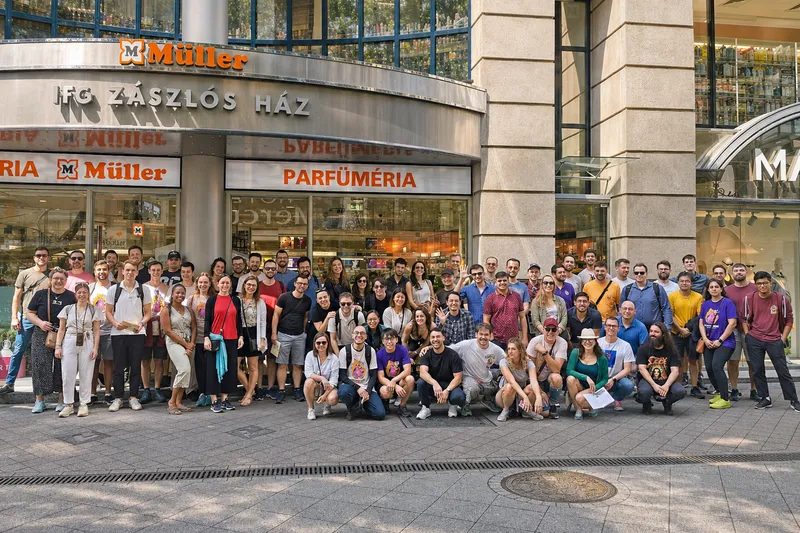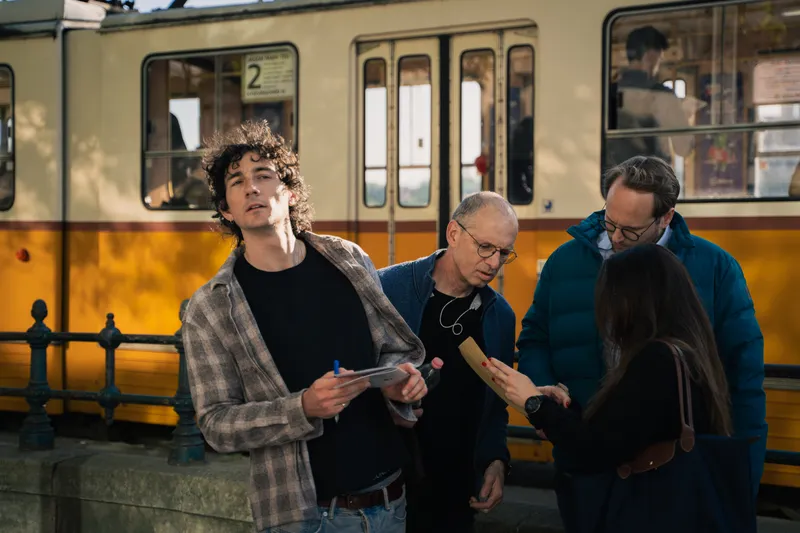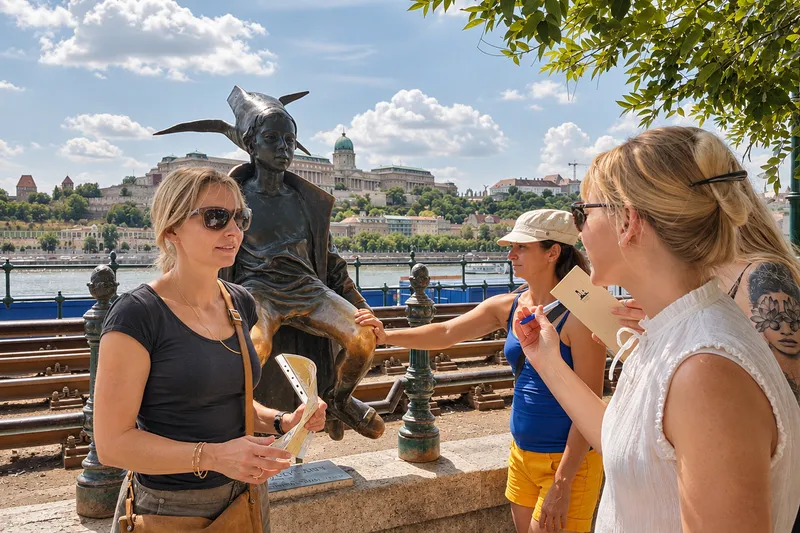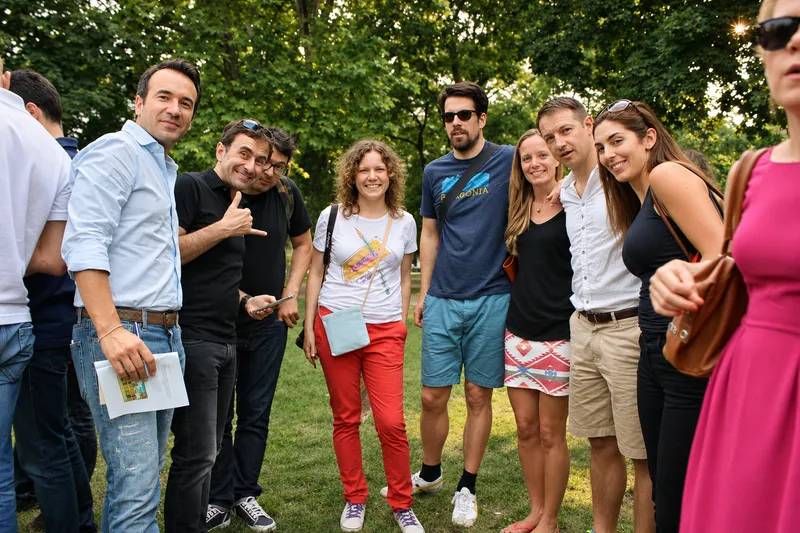
When a group of 120 people lands in a city for one evening, the team building has to do two jobs at once: show people the city and bring everyone back together at the end. This case study follows one of the largest groups we have hosted in Budapest — a team of Google employees — from the first enquiry to the award ceremony over dinner, and shows how a treasure hunt in Budapest scales to a hundred and more players.
The brief
Google was bringing around 120 employees to Budapest for a company trip and wanted a treasure hunt through the city on a Monday afternoon in June. The request came about six weeks before the event, with a clear outline: the game should start in the afternoon, and at the end all groups should meet at one point for dinner.
The organisers were working from two other countries, together with a local event agency in Budapest. Most of the planning therefore happened by email and on a video call, with one of the organisers checking the venues in Budapest in person a few weeks before the event.
How do you split 120 people?
The first question from the organisers was the one every planner of a large group asks: how do you usually split a group of 120? Our answer was the same as it is today — everyone starts together, from one meeting point, and everyone finishes together.
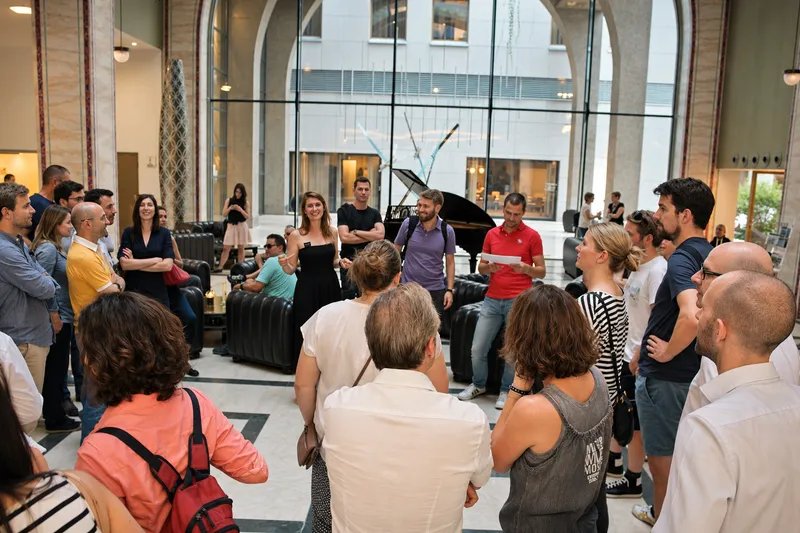
- One start: the whole group met in the lobby of their hotel in the centre of Pest, where our Game Masters ran a single briefing and handed out the game kits — special maps and booklets.
- 15 teams: the organisers set the final team list themselves, so colleagues from different offices played together.
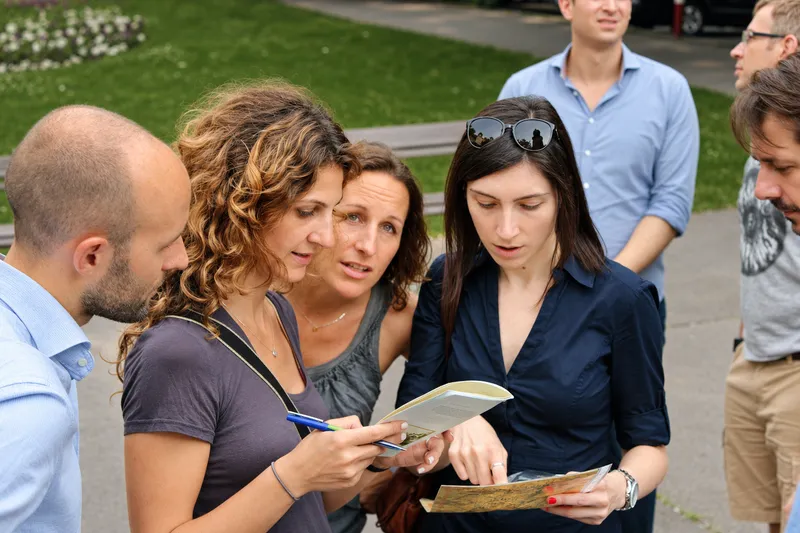
- Strategy instead of a fixed route: every team chose its own order through the game area. That spreads a large group naturally across the city, so 120 people never crowd the same corner at the same time.
- One finish: all teams ended at the restaurant where the dinner was booked.
More on running events of this size in our guide to team building for large groups in Budapest.
Making it a Google game
A treasure hunt for a company of this kind should feel like their game, not a standard tour. The organisers asked for two things:
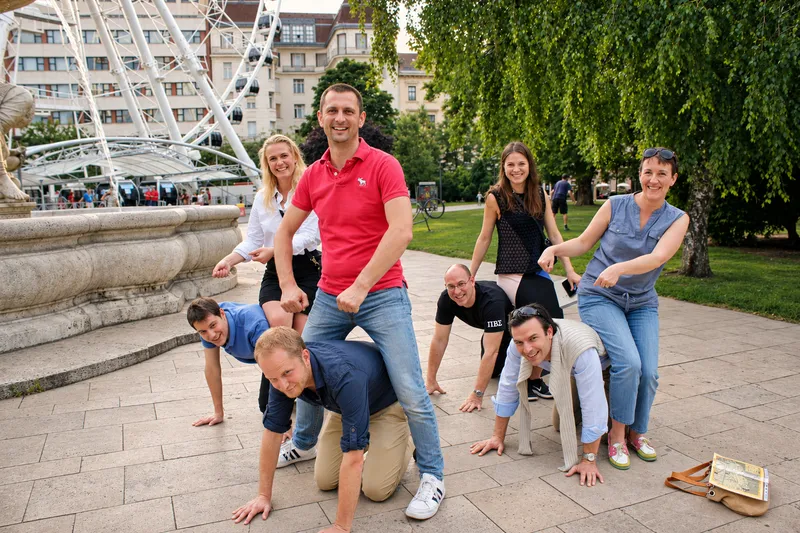
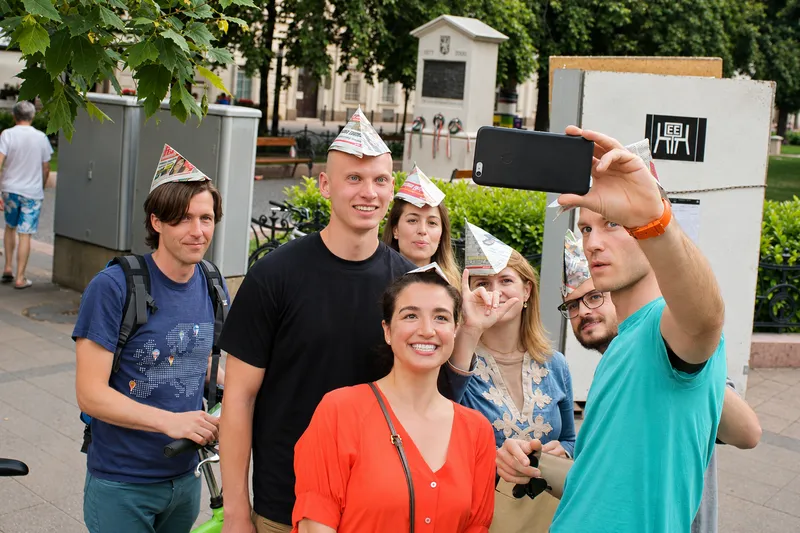
- Photo tasks — “so people are taking fun photos of their groups at various locations”. Next to the main story, built around a Budapest legend with a secret code to crack, the booklet included twelve team building activities, and the photos were judged at the end of the evening.
- One task linked to their own work, for example guessing a colleague from a few facts or from a picture. We discussed the options with the organisers and shared a sample question in advance — a riddle hidden in a poem — so they could see the style before the day.
We did not reveal the full list of stops and questions — partly because the route is our know-how, and partly because we hoped the organisers would play too. Today, a quiz about your company or tasks built around your values are standard add-ons.
The evening itself
Plans changed twice in the last weeks — and that is normal for a group of this size. The dinner venue moved to a different restaurant, and the start time moved to 17:45, with the whole group expected at dinner by 20:00. The new restaurant happened to sit right in the middle of the hunt area, which made the finish even easier. With the timing fixed, the Game Masters built the game so that every team could play right up to the deadline.
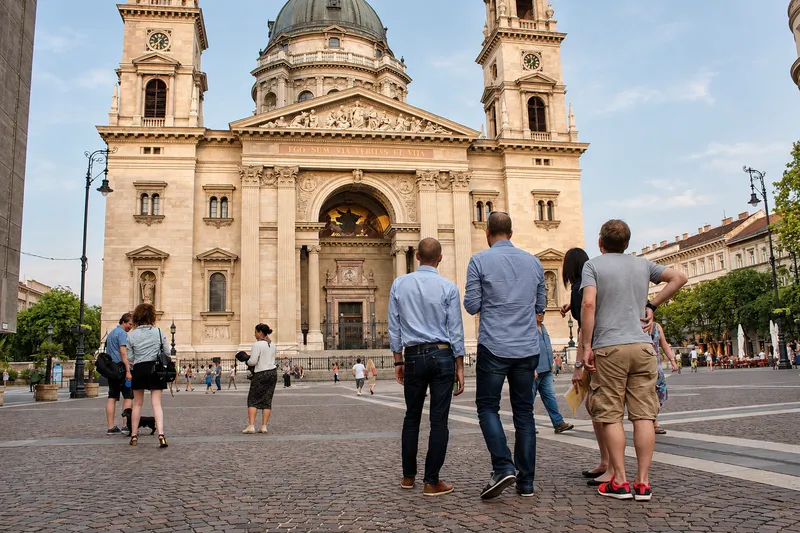
On a warm June evening, fifteen teams spread out across the centre of Pest. The parks and squares around Erzsébet Square and the Danubius Fountain turned into a stage for the photo tasks, and the teams worked their way past St. Stephen’s Basilica and through the streets of Belváros, solving riddles and collecting pieces of the secret code.
The finale at dinner
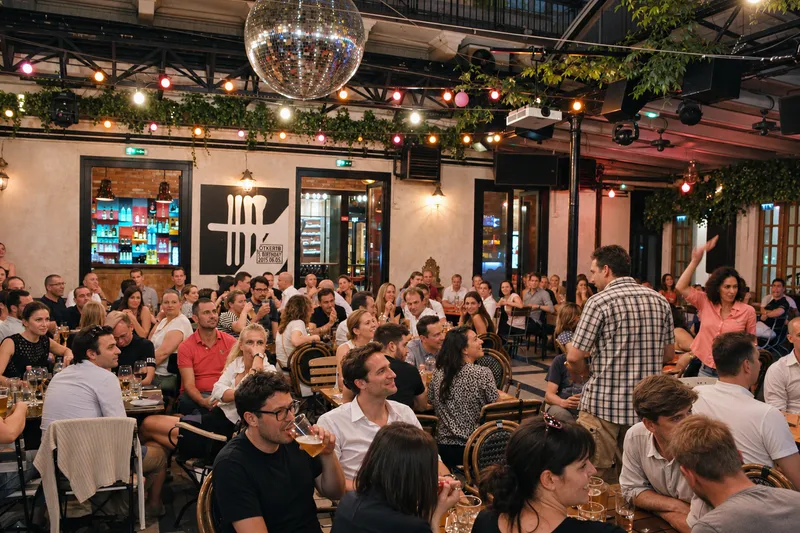
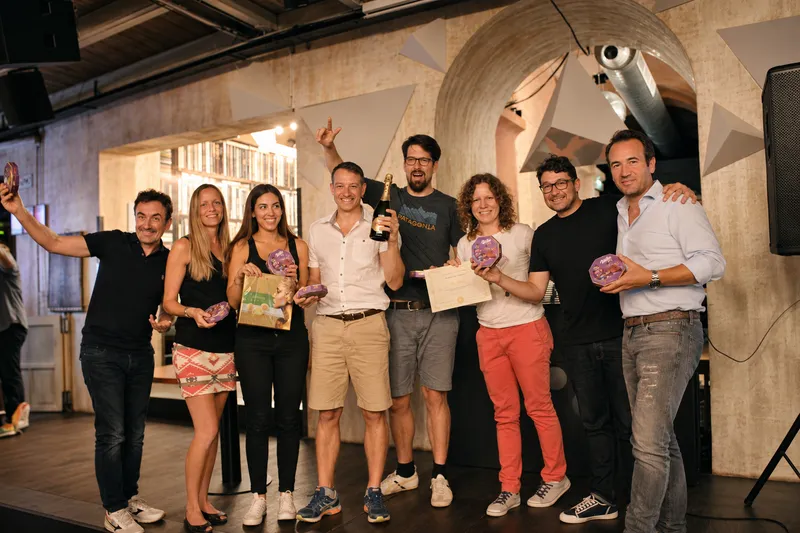
By 20:00 all fifteen teams had reached the restaurant, a popular courtyard venue in the heart of the city. While the first drinks arrived, the Game Masters scored the answers and picked the best photos. The award ceremony then turned the room into one big audience: the funniest photos on show, the secret code revealed and the winning teams called up for their prizes — before the evening continued with dinner.
What made it work
A few principles carried this event, and they apply to any large group in Budapest:
- One start, one finish. A single briefing and a shared finale keep a group of 120 together, even when the teams spread across the city in between.
- A fixed arrival time. “Everyone at the restaurant by 20:00” is a rule every team can play against — and it protects the dinner.
- Photo tasks for a big crowd. They give the award ceremony something everyone wants to see, not just a list of scores.
- A personal touch. One task linked to the company makes the game feel made for the group.
- Room for late changes. A new restaurant or a new start time a week before is easy to absorb when the game area and the format stay the same.
As with all our events, there was no deposit: the treasure hunt was invoiced after the event. Planning something similar? Read how to plan team building in Budapest, see our other case study of a company offsite, or send us your date for an instant quote.